
Chi Master
Mastering others is strength. Mastering yourself is true power.
A Chi Master embodies the union of physical prowess, spiritual enlightenment, and the cultivation of internal energy. They are skilled practitioners who tap into the vast reservoirs of their internal energy to achieve extraordinary physical feats, all while striving to maintain harmony within themselves and the world around them. The path of a Chi Master is one of discipline, self-discovery, and enlightenment.
“The purpose of training is to tighten up the slack, toughen the body, and polish the spirit.”
— Morihei Ueshiba
Top traits
Internal — 100%
Tradition — 80%
Fitness — 50%
Self-defense — 40%
Focus areas
InternalTraditionalFlexibilityHealth and wellnessFitnessWeapons
Styles for this archetype
Tai Chi (太極拳)
Tai Chi — Taijiquan (太極拳) — is a Chinese internal martial art practiced for health, meditation, and self-defense. Its slow, flowing movements build balance, reduce stress, and develop internal energy — qi (氣).

🇨🇳 ChinaInternal
Bagua (八卦掌)
Baguazhang (八卦掌, "Eight Trigram Palm") is a Chinese internal martial art — neijia (內家) — characterized by continuous circular walking — zou zhuan (走轉) — rapid direction changes, and open-palm strikes. It is designed for fighting multiple opponents.

🇨🇳 ChinaInternal
Xing Yi (形意拳)
Xing Yi Quan (形意拳, "Form-Intention Fist") is one of the three major Chinese internal martial arts — neijia (內家). It uses direct, linear strikes based on the wu xing (五行, Five Elements) — pi (劈, splitting), beng (崩, crushing), zuan (鑽, drilling), pao (炮, pounding), heng (橫, crossing) — and shi er xing (十二形, twelve animal forms).
🇨🇳 ChinaInternal
Aikido (合気道)
Aikido (合気道) is a Japanese martial art focused on redirecting an attacker's energy through joint locks and throws. Founded by Morihei Ueshiba, it emphasizes harmony and non-resistance.

🇯🇵 JapanGrappling
Wing Chun (詠春拳)
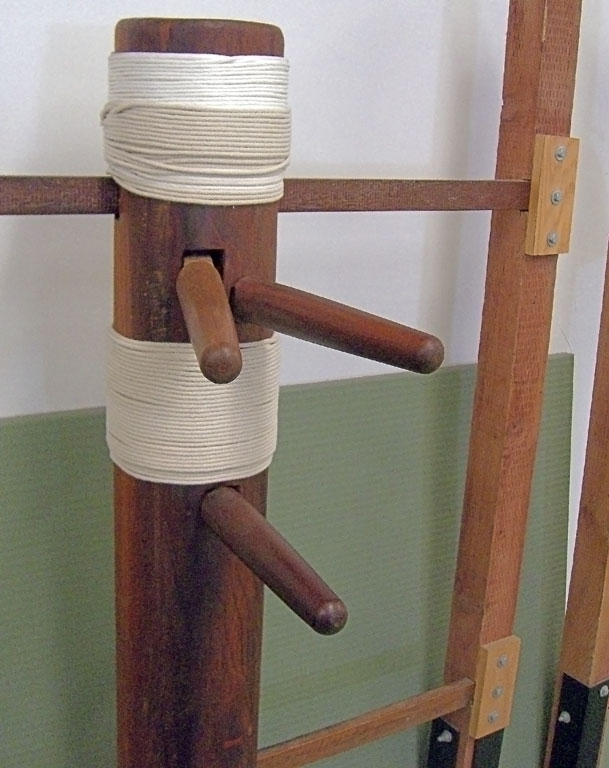
Wing Chun (詠春拳) is a Southern Chinese martial art emphasizing close-range combat, simultaneous defense and attack, and economy of motion. Popularized globally by Ip Man and Bruce Lee, it uses centerline theory and sensitivity training — Chi Sau (黐手, sticky hands).
🇨🇳 ChinaStriking
Kung Fu (功夫)
Kung Fu — gongfu (功夫) — is a broad term for Chinese martial arts, or wushu (武術), encompassing hundreds of styles. Training typically includes forms — taolu (套路) — conditioning, and combat applications with an emphasis on philosophy and tradition.
🇨🇳 ChinaStriking
Notable Chi Masters
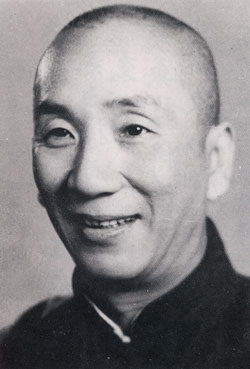
Ip Man (葉問)
Ip Man was a Wing Chun grandmaster who popularized the art in Hong Kong and trained many notable students, most famously Bruce Lee. His teaching lineage is responsible for spreading Wing Chun worldwide, making it one of the most practiced Chinese martial arts today.
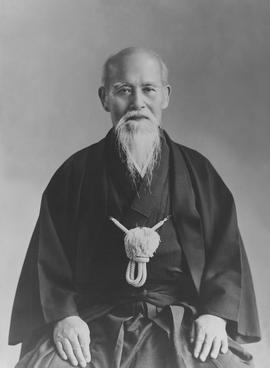
Morihei Ueshiba (植芝盛平)
Morihei Ueshiba founded Aikido, a martial art focused on redirecting an attacker's energy rather than meeting force with force. His philosophy of harmony and non-violence made Aikido unique among martial arts, attracting practitioners who value spiritual development alongside physical technique.
Yang Chengfu (楊澄甫)
Yang Chengfu was the grandson of Yang Luchan and the primary architect of the standardized Yang-style Tai Chi form practiced by millions worldwide. He softened and expanded the movements for health and accessibility, creating the slow, flowing form that most people associate with Tai Chi today.

Chen Fake (陳發科)
Chen Fake was the greatest Chen-style Tai Chi master of the 20th century, arriving in Beijing in 1928 and remaining undefeated in challenge matches for 30 years. His explosive fajin (power release) and martial prowess proved that Tai Chi was a devastating fighting art, not merely a health exercise.
