Kung Fu
功夫
AI-generated content — may contain inaccuracies
At a Glance
Who It's For
What You'll Learn
Fundamental stances — mabu (馬步, horse), gongbu (弓步, bow), xubu (虛步, empty)
Hand strikes, palm strikes, and blocks
Kicking techniques (snap, crescent, sweep)
Taolu (套路, forms) for solo and weapon practice
Conditioning, qigong (氣功), and flexibility training
Traditional weapons — gun (棍, staff), dao (刀, broadsword), jian (劍, straight sword)
Your First Class
Watch & Learn
Gallery


Legends of Kung Fu
Bruce Lee (李小龍)
Bruce Lee was a martial artist, actor, and philosopher who is widely considered the most influential martial artist of all time. He bridged Eastern and Western martial arts, founding Jeet Kune Do — a hybrid philosophy that rejected rigid style boundaries in favor of practical, adaptable combat.

Jet Li (李连杰)
Jet Li won five consecutive Chinese National Wushu Championships before the age of 19, then became one of the most internationally acclaimed martial arts film stars in history. His films — including Shaolin Temple, Once Upon a Time in China, and Fearless — introduced millions to the beauty and power of Chinese wushu.

Wong Fei-hung (黃飛鴻)
Wong Fei-hung was a legendary Hung Ga Kung Fu master, traditional Chinese medicine practitioner, and folk hero. His life has been depicted in over 100 films, making him one of the most portrayed martial artists in cinema history.
Ip Man (葉問)
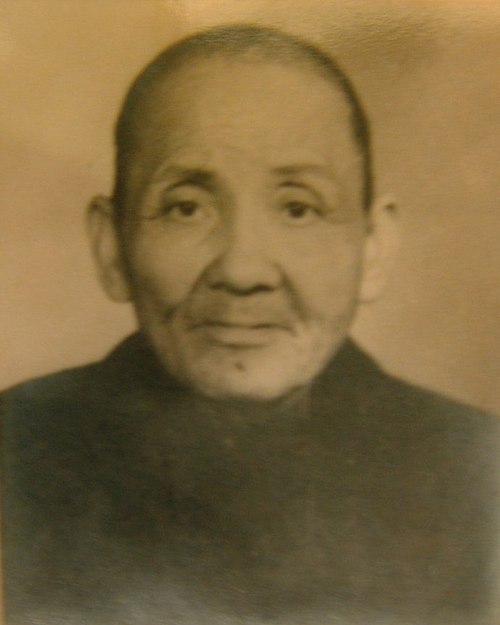
Ip Man was a Wing Chun grandmaster who popularized the art in Hong Kong and trained many notable students, most famously Bruce Lee. His teaching lineage is responsible for spreading Wing Chun worldwide, making it one of the most practiced Chinese martial arts today.
Related Styles
Wing Chun
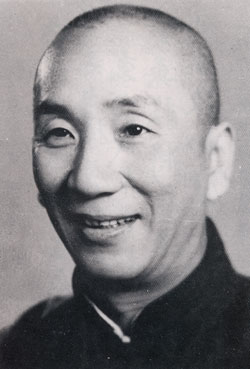
Wing Chun (詠春拳) is a Southern Chinese martial art emphasizing close-range combat, simultaneous defense and attack, and economy of motion. Popularized globally by Ip Man and Bruce Lee, it uses centerline theory and sensitivity training — Chi Sau (黐手, sticky hands).

Tai Chi
Tai Chi — Taijiquan (太極拳) — is a Chinese internal martial art practiced for health, meditation, and self-defense. Its slow, flowing movements build balance, reduce stress, and develop internal energy — qi (氣).

Karate
Karate is a Japanese striking art that uses punches, kicks, knee strikes, and open-hand techniques. Originating in Okinawa, it emphasizes kata (型, forms), kihon (基本, basics), and kumite (組手, sparring).

Sanda
Sanda (散打, sǎn dǎ) — also called Sanshou (散手) — is the full-contact fighting component of Chinese wushu (武術). It combines kickboxing with takedowns and throws, fought on a raised lei tai (擂台, lèi tái) platform.
Popular With
Chi Master
Mastering others is strength. Mastering yourself is true power.
Technician
Absorb what is useful, discard what is useless.

Traditionalist
The ultimate aim of martial arts is not having to use them.

Completionist
There is no limit. When you reach one goal, find a new one.
Weaponologist
Give me any weapon.

Ready to train Kung Fu?
Find schools near you and book a free trial class.