Shotokan
松濤館
AI-generated content — may contain inaccuracies
At a Glance
Who It's For
What You'll Learn
Deep stances — zenkutsu-dachi (前屈立ち), kokutsu-dachi (後屈立ち), kiba-dachi (騎馬立ち) — and powerful linear techniques
Fundamental kata (型) including Heian (平安) series and Tekki (鉄騎)
Kihon (基本, basics) drills — oi-zuki (追い突き, lunge punch), gyaku-zuki (逆突き, reverse punch), mae-geri (前蹴り, front kick)
Sanbon kumite (三本組手, three-step) and ippon kumite (一本組手, one-step) sparring for distance and timing
The philosophy of karate-do (空手道) as a path of self-improvement — dojo kun (道場訓)
Your First Class
Watch & Learn
Gallery

Legends of Shotokan
Gichin Funakoshi (船越義珍)
Gichin Funakoshi is widely regarded as the father of modern Karate. He brought the Okinawan art to mainland Japan in the early 20th century, transforming it from a regional self-defense system into a globally practiced martial art and sport.

Hirokazu Kanazawa (金澤弘和)
Hirokazu Kanazawa is widely regarded as the greatest Shotokan karate competitor of all time, famously winning the All Japan Championship with a broken hand. He later founded the Shotokan Karate-do International Federation (SKIF), one of the largest Shotokan organizations in the world. His fluid, powerful style and deep understanding of kata made him an ambassador for the art across six decades.

Masatoshi Nakayama (中山正敏)
Masatoshi Nakayama served as Chief Instructor of the Japan Karate Association and was the primary architect of Shotokan karate's global spread. His systematic approach to instruction, including the landmark Best Karate book series, created the standardized curriculum used by millions of karate practitioners worldwide.
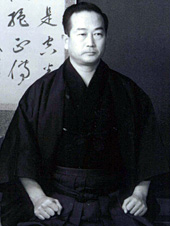
Tatsuya Naka
Related Styles
Shotokai
Shotokai is a branch of Shotokan karate that preserves the teachings of Gichin Funakoshi and his student Shigeru Egami. It rejects sport competition and emphasizes relaxed, flowing movement with total commitment in each technique.
Wado-ryu
Wado-ryu (和道流, "way of harmony") was founded by Hironori Otsuka, blending Shotokan karate with Shindo Yoshin-ryu jujutsu (新道楊心流柔術). It emphasizes nagasu (流す, flowing with an attack) and tai sabaki (体捌き, body shifting) rather than meeting force with force.
Karate
Karate is a Japanese striking art that uses punches, kicks, knee strikes, and open-hand techniques. Originating in Okinawa, it emphasizes kata (型, forms), kihon (基本, basics), and kumite (組手, sparring).

Shito-ryu
Shito-ryu (糸東流) was founded by Kenwa Mabuni and has the largest number of kata (型) of any karate style (over 60). It blends elements of Shuri-te (首里手) and Naha-te (那覇手), emphasizing both speed and power.
Popular With
Traditionalist
The ultimate aim of martial arts is not having to use them.

Ready to train Shotokan?
Find schools near you and book a free trial class.