Hoki-ryu
伯耆流
Weapons🇯🇵 Japan
Written with AI, so it may contain mistakes.
Why train this
At a glance
IntensityLow
ContactNone
For beginnersModerate
Belt systemMenkyo system
Origin🇯🇵 Japan
CompetitionEmbu demonstrations
Who it's for
Traditional
What you'll learn
Classical iaijutsu drawing and cutting techniques
Formal kata with emphasis on precision
Composure and mental stillness under pressure
Correct sword handling and etiquette
Your first class
Watch and learn
Legends of Hoki-ryu
Katayama Hoki-no-kami (founder)
Related styles
Iaijutsu
Iaijutsu (居合術, "art of mental presence and drawing") is the classical Japanese art of drawing the katana (刀) and cutting in a single motion — nukitsuke (抜き付け). It is practiced through solo and paired kata (型) using an iaito (居合刀, blunt practice sword) or shinken (真剣, live blade).
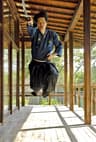
Iaido
Iaido (居合道, "way of mental presence and harmony") is the modern art of drawing and cutting with the Japanese sword. Standardized by the Zen Nihon Kendo Renmei (全日本剣道連盟, ZNKR), it is practiced primarily through solo kata (型) with a focus on form, etiquette — reigi (礼儀) — and spiritual development.
Mugai-ryu
Mugai-ryu is a Japanese sword school founded in 1693 by Tsuji Gettan Sukemochi, a Zen priest. It combines sword techniques with Zen philosophy, emphasizing clarity of mind in the midst of action.
Kenjutsu
Kenjutsu (剣術, "sword technique") refers to the classical Japanese sword arts — koryu (古流, old-school traditions) — practiced by samurai (侍). Unlike Kendo, it uses wooden bokken (木剣) or blunted steel swords and focuses on partner kata (型) preserving battlefield techniques.
