Hapkido
합기도
Hybrid🇰🇷 Korea
Written with AI, so it may contain mistakes.
Why train this
At a glance
IntensityMedium
ContactMedium
For beginnersModerate
Origin🇰🇷 Korea
Belt systemGeup/Dan (white to black belt)
CompetitionKorea Hapkido Federation events, Open martial arts tournaments
Who it's for
Self-DefenseTraditionalFitness
What you'll learn
Joint locks and wrist manipulation
Dynamic kicking combinations
Throwing and takedown techniques
Weapon defense (knife, stick, gun)
Nakbeop (낙법, breakfalls) and rolling
Hoshinsul (호신술, self-defense applications) and pressure points
Your first class
Watch and learn
Gallery

Legends of Hapkido
Ji Han-jae (지한재)
Ji Han-jae is credited with systematizing hapkido into a structured curriculum and expanding it beyond its Daito-ryu jujutsu roots by adding high kicks and weapons techniques. He later founded Sin Moo Hapkido and served as chief martial arts instructor to the Korean Presidential Security Forces.

Myung Jae-nam (명재남)
Myung Jae-nam was a direct student of hapkido founder Choi Yong-sool who went on to create Hankido, a softer, more circular derivative that emphasizes flowing techniques and energy redirection. His work bridged the gap between hapkido's hard self-defense roots and the softer internal martial arts.
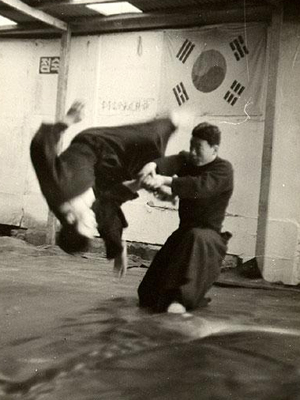
Choi Yong-sool (최용술)
Choi Yong-sool founded Hapkido by blending Japanese Daitō-ryū techniques learned during the occupation era with Korean kicking and striking methods. His art filled the gap between hard-style Taekwondo and soft-style Aikido, giving Korea a comprehensive self-defense system of its own.

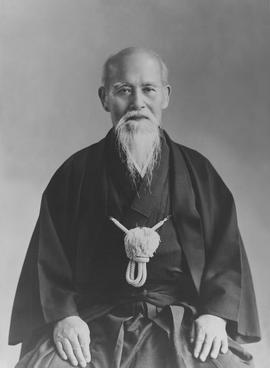
Morihei Ueshiba (植芝盛平)
Morihei Ueshiba founded Aikido, a martial art focused on redirecting an attacker's energy rather than meeting force with force. His philosophy of harmony and non-violence made Aikido unique among martial arts, attracting practitioners who value spiritual development alongside physical technique.
Related styles
Aikido
Aikido (合気道) is a Japanese martial art focused on redirecting an attacker's energy through joint locks and throws. Founded by Morihei Ueshiba, it emphasizes harmony and non-resistance.

Taekwondo
Taekwondo (태권도) is a Korean martial art known for its fast, high, and spinning kicks. It is one of only two martial arts in the Olympic Games and is practiced by over 80 million people worldwide.

Jiu-Jitsu
Japanese Jiu-Jitsu — jujutsu (柔術, "gentle art") — is the original grappling art of the samurai (侍), encompassing nage-waza (投技, throws), kansetsu-waza (関節技, joint locks), osae-waza (抑え技, pins), and atemi (当身, strikes). It is the ancestor of Judo, Aikido, and Brazilian Jiu-Jitsu.
Hwa Rang Do
Hwa Rang Do (화랑도, "Way of the Flowering Knights") is a comprehensive Korean martial art system encompassing striking, grappling, joint locks — kwanjyel gi (관절기) — weapons, and even healing techniques — in sul (인술). Named after the Hwarang (花郎) warrior tradition of the Silla Dynasty.