Brazilian Jiu-Jitsu
Jiu-Jitsu Brasileiro
Grappling🇧🇷 Brazil
Written with AI, so it may contain mistakes.
Why train this
At a glance
IntensityHigh
ContactFull
For beginnersEasy
Origin🇧🇷 Brazil
Belt systemWhite, Blue, Purple, Brown, Black (+ coral and red)
CompetitionIBJJF World Championships, ADCC, Abu Dhabi Grand Slam
Who it's for
CompetitionSelf-DefenseFitness
What you'll learn
Guard (guarda) positions — closed guard, half guard, open guard
Submissions — armbar, triangle, rear-naked choke (mata leao), kimura
Sweeps (raspagem) and reversals from bottom position
Positional control — mount (montada), side control, back control
Takedowns and guard pulling (puxada de guarda)
Escapes and defensive frames
Your first class
Watch and learn
Gallery


Legends of Brazilian Jiu-Jitsu
Royce Gracie
Royce Gracie changed martial arts forever by winning the first UFC tournaments using Brazilian Jiu-Jitsu against much larger opponents from other disciplines. His victories proved that technique and leverage could overcome size and strength, sparking the global BJJ revolution.

Hélio Gracie
Hélio Gracie adapted traditional Judo techniques for smaller, weaker practitioners, emphasizing leverage and submission over strength. Along with his brother Carlos, he co-founded Brazilian Jiu-Jitsu — a system that would transform martial arts and become the foundation of modern MMA.

Rickson Gracie
Rickson Gracie is considered by many in the Gracie family to be the greatest BJJ fighter of his generation. Known for his emphasis on invisible Jiu-Jitsu — the subtle weight distribution and pressure that separates good from great — he carries the Gracie legacy with a focus on the art's self-defense roots.

Carlos Gracie Sr.
Carlos Gracie Sr. learned Judo from Mitsuyo Maeda in Brazil, adapted it into what would become Brazilian Jiu-Jitsu, and opened the first Gracie academy in 1925. He issued open challenges to fighters of all styles — the original "Gracie Challenge" — planting the seed that would eventually grow into the UFC and modern MMA.

Related styles
Judo
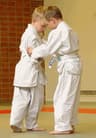
Judo (柔道, "the gentle way") was founded by Jigoro Kano in 1882. It is a throwing-dominant grappling art with groundwork — newaza (寝技). It has been an Olympic sport since 1964 and is practiced by millions worldwide.
Wrestling
Wrestling is one of the oldest combat sports, with Olympic roots dating to ancient Greek pankration (παγκράτιον) and wrestling events from 708 BC. Modern competitive wrestling includes Freestyle and Greco-Roman styles, emphasizing takedowns, control, and pinning.

MMA
Mixed Martial Arts (MMA) combines striking and grappling from multiple disciplines into a unified combat sport. Competitors fight using techniques from boxing, wrestling, BJJ, Muay Thai, and more.

Jiu-Jitsu
Japanese Jiu-Jitsu — jujutsu (柔術, "gentle art") — is the original grappling art of the samurai (侍), encompassing nage-waza (投技, throws), kansetsu-waza (関節技, joint locks), osae-waza (抑え技, pins), and atemi (当身, strikes). It is the ancestor of Judo, Aikido, and Brazilian Jiu-Jitsu.
Popular with these archetypes
Technician
Absorb what is useful, discard what is useless.

Guardian
Only a warrior chooses pacifism; others are condemned to it.

Completionist
There is no limit. When you reach one goal, find a new one.

Grappler
Position before submission.

Ready to train Brazilian Jiu-Jitsu?
Find schools near you and book a free trial class.
Find Brazilian Jiu-Jitsu schools